- Caution: For safety, have me come over and watch before you turn anything on.
- Before connecting anything, be sure that neither Base Unit 1's nor Base Unit 2's power cord is plugged in.
- On both base units, be sure the console switch is in the off position.
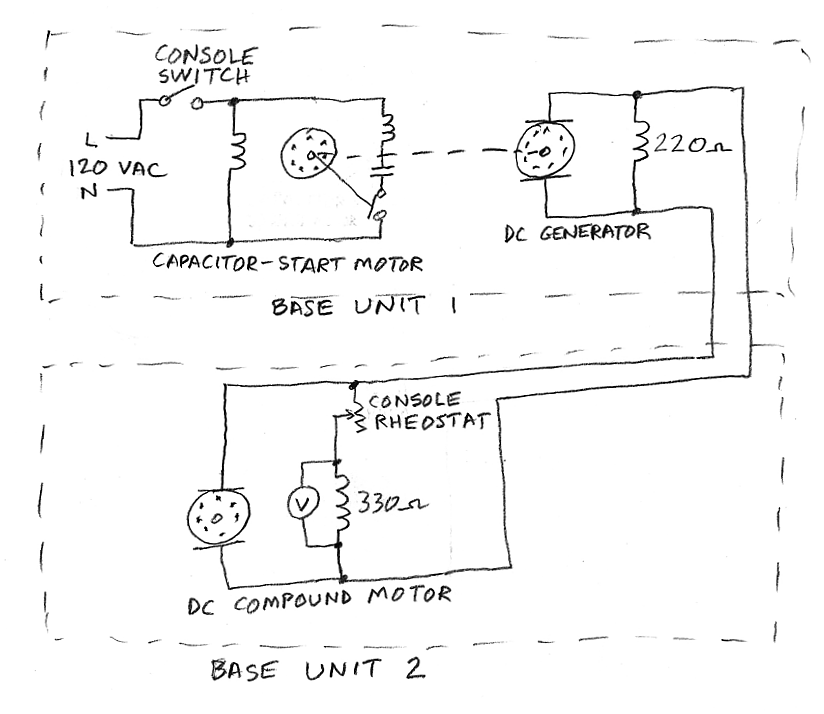
- According to the diagram above, wire up Base Unit 1. (Do not wire up Base Unit 2 yet.)
- Connect a voltmeter to the output of the generator.
- Call me over and then turn on Base Unit 1.
- If you don't get any significant voltage out of the
generator, reverse the way that you have it's field winding connected
to the armature. (You should get something more than 120 volts out of
the generator.)
- The generator's field winding needs to be connected
to the armature with the right polarity. If the polarity isn't right,
you'll get almost no voltage out of the armature winding.
- Turn off Base Unit 1.
- Wire up Base Unit 2, including the wires that connect the DC motor to the generator.
- Turn Base Unit 2's rheostat to the zero position.
- This corresponds to zero resistance between the two terminals of the rheostat.
- Call me over again and then turn on Base Unit 1. Caution: If the DC motor starts running dangerously fast, immediately turn off Base Unit 1.
- Only run the system for 30 seconds or so, and then let it cool off for a minute or two before running it again.
- We're drawing a little more current from the generator than it was designed for.
- Write down the voltage across the DC motor's field winding here: ____________
- Using an optical tachometer, measure the speed of the DC motor and write it here: ____________
- Turn the rheostat to a slightly higher number.
- Field winding voltage: ____________
- Speed: ____________
|